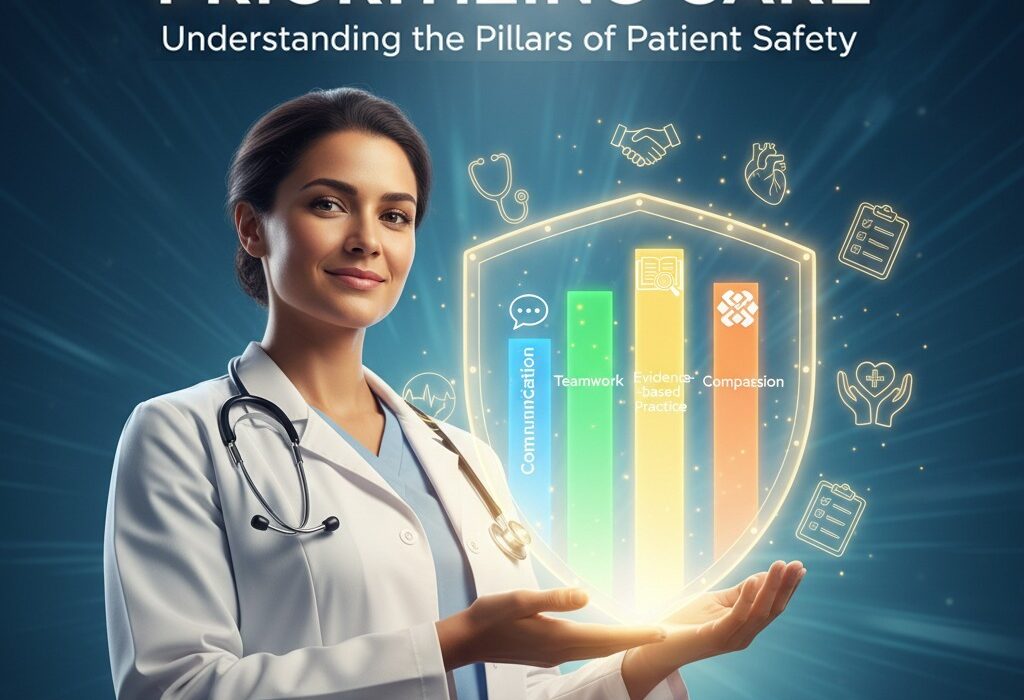
Remember the last time you visited a hospital? That slight nervousness wasn’t just about your health condition—it was also about trusting strangers with your wellbeing. In today’s rapidly evolving healthcare landscape, patient safety has become more critical than ever before. With medical errors claiming approximately 2.6 million lives annually worldwide, according to WHO’s latest 2024 report, understanding how healthcare systems protect patients isn’t just important—it’s literally life-saving.
As we step into 2025, healthcare institutions globally are reimagining their approach to keeping patients safe. But what exactly makes a healthcare environment truly secure? Let’s dive deep into the fundamental pillars that form the backbone of modern patient safety protocols.
The Evolution of Patient Safety: From Reaction to Prevention
Gone are the days when hospitals merely responded to adverse events. Today’s healthcare ecosystem thrives on predictive analytics and proactive measures. The transformation has been remarkable, especially in India, where the National Patient Safety Implementation Framework (NPSIF) 2024-2026 has revolutionized how we approach medical care.
Dr. Asif Iqbal, a Senior Consultant specializing in Critical Care, Pulmonology, and Respiratory Medicine at Apollo Multispeciality Hospital in Kolkata, emphasizes this paradigm shift: “In critical care settings, we’ve learned that system-based approaches to safety far outweigh individual blame. When dealing with ventilator management or complex respiratory cases, it’s the protocols and team coordination that prevent errors, not just individual expertise.” His experience in managing ICU protocols has shown that creating robust safety systems reduces adverse events by up to 60% in critical care units.
The Human Factor: Why 70% of Medical Errors Are Preventable
Here’s something that might surprise you—research from the Indian Journal of Medical Ethics (2024) reveals that nearly seven out of ten medical errors stem from communication breakdowns rather than technical incompetence. Think about it: when was the last time a simple miscommunication caused chaos in your workplace? Now imagine that happening in an operating room.
Core Pillars of Modern Patient Safety
1. Communication Excellence: The Foundation Stone
Effective communication isn’t just about speaking clearly—it’s about creating an ecosystem where information flows seamlessly. The implementation of SBAR (Situation, Background, Assessment, Recommendation) protocols has reduced critical incidents by 47% in Indian tertiary care hospitals, according to a 2024 study published in the National Medical Journal of India.
Key Communication Strategies:
- Structured handoffs during shift changes
- Multilingual patient education materials
- Digital documentation systems with real-time updates
- Regular interdisciplinary team huddles
I recently observed a morning huddle at a leading Mumbai hospital where nurses, doctors, and support staff spent just 10 minutes aligning on the day’s priorities. The result? Zero medication errors that day in a 50-bed unit.
2. Technology Integration: The Digital Guardian
The year 2025 marks a watershed moment for healthcare technology. AI-powered systems now flag potential drug interactions before prescriptions are filled, while IoT devices monitor vital signs continuously, alerting staff to subtle changes that human observation might miss.
Technological Innovations Enhancing Patient Safety:
Smart Medication Management
Barcode medication administration (BCMA) systems have reduced medication errors by 86% in facilities that have fully implemented them. These systems verify the five rights of medication administration—right patient, right drug, right dose, right route, and right time—automatically.
Predictive Analytics
Machine learning algorithms now analyze patterns in patient data to predict complications hours before clinical symptoms appear. A Bangalore-based startup’s algorithm successfully predicted sepsis onset 6 hours earlier than traditional methods in 82% of cases during 2024 trials.
3. Culture of Safety: Building Trust Through Transparency
Creating a blame-free environment where staff feel comfortable reporting near-misses has proven transformative. The Chennai Apollo Hospitals’ “Safe Space Initiative” saw a 340% increase in voluntary error reporting after implementing anonymous reporting systems and eliminating punitive measures for honest mistakes.
Elements of a Strong Safety Culture:
- Non-punitive error reporting systems
- Regular safety rounds by leadership
- Celebration of safety achievements
- Continuous learning from incidents
As one senior nurse from Fortis Healthcare mentioned on a popular healthcare Quora thread: “When we stopped fearing punishment for reporting errors, we started preventing them altogether.”
Implementing Safety Protocols: A Practical Approach
The WHO Surgical Safety Checklist: Simple Yet Powerful
You’d be amazed how a simple checklist can save lives. The WHO Surgical Safety Checklist, now mandatory in Indian hospitals since 2024, has reduced surgical complications by 36% and mortality by 47%. It’s not rocket science—it’s methodical verification.
The Three-Phase Approach:
- Before anesthesia – Verify patient identity, surgical site, and consent
- Before incision – Confirm team introductions and antibiotic prophylaxis
- Before leaving OR – Count instruments and review recovery concerns
Infection Control: The Invisible Shield
Hospital-acquired infections affect 1 in 10 patients globally, but rigorous infection control protocols can slash these rates dramatically. The “Swachh Hospitals Initiative” launched by the Indian government in late 2024 has already shown promising results, with participating hospitals reporting 43% fewer infections.
Critical Infection Control Measures:
- Hand hygiene compliance monitoring using AI cameras
- UV-C disinfection robots for high-risk areas
- Antimicrobial stewardship programs
- Regular environmental sampling and feedback
Patient and Family Engagement: The Often-Overlooked Pillar
Here’s where things get really interesting. Engaged patients experience 23% fewer adverse events, according to research from the Public Health Foundation of India (2024). Why? Because they become active participants in their care rather than passive recipients.
Empowering Patients Through Education
Remember feeling confused about medical jargon during a doctor’s visit? You’re not alone. Healthcare facilities implementing comprehensive patient education programs report improved satisfaction scores and better clinical outcomes.
Effective Patient Engagement Strategies:
- Bedside shift reports including patients
- Teach-back methods for medication instructions
- Digital health literacy programs
- Family involvement in care planning
A recent Quora discussion highlighted how one Pune hospital’s “Patient as Partner” program reduced readmission rates by 28% simply by ensuring patients understood their discharge instructions completely.
Measuring Success: Key Performance Indicators for Patient Safety
Beyond Numbers: Understanding Impact
Tracking patient safety metrics isn’t just about collecting data—it’s about understanding patterns and preventing future harm. Leading healthcare institutions now use balanced scorecards that combine outcome metrics with process indicators.
Essential Safety Metrics for 2025:
- Patient fall rates per 1,000 patient days
- Medication error rates and severity
- Hospital-acquired infection rates
- Patient safety culture survey scores
- Time to resolution for safety incidents
The National Accreditation Board for Hospitals (NABH) has updated its standards for 2025, requiring real-time dashboard monitoring of these metrics, making transparency the new normal in Indian healthcare.
Challenges and Solutions: Navigating the Complex Healthcare Landscape
Resource Constraints: Doing More with Less
Let’s address the elephant in the room—not every hospital has unlimited resources. Rural healthcare facilities, in particular, face unique challenges in implementing comprehensive patient safety programs. However, innovative solutions are emerging.
Cost-Effective Safety Interventions:
- Peer learning networks for resource sharing
- Mobile health applications for remote monitoring
- Telemedicine consultations for expert second opinions
- Community health worker training programs
The Tamil Nadu government’s “Safe Village Clinics” program demonstrates that even basic facilities can achieve excellent safety outcomes through smart resource allocation and community engagement.
Staff Burnout: The Hidden Threat to Patient Safety
Healthcare worker burnout reached critical levels post-pandemic, with 64% of Indian healthcare professionals reporting symptoms in 2024. Exhausted staff make more errors—it’s that simple. Progressive hospitals are now treating staff wellbeing as a patient safety issue.
Burnout Prevention Strategies:
- Mandatory break rooms with relaxation facilities
- Flexible scheduling options
- Mental health support services
- Recognition and reward programs
The Future of Patient Safety: Emerging Trends for 2025 and Beyond
Personalized Safety Protocols
Generic safety protocols are giving way to personalized approaches based on individual patient risk factors. AI algorithms now create custom safety plans considering genetics, medical history, and social determinants of health.
Global Collaboration Networks
The Global Patient Safety Collaborative, launched in late 2024, connects hospitals worldwide to share real-time safety data and best practices. Indian hospitals participating in this network have already adopted several international innovations, improving their safety scores significantly.
Virtual Reality Training
VR simulations allow healthcare workers to practice high-risk procedures in safe environments. Medical colleges across India are incorporating VR training modules, with early adopters reporting 40% fewer procedural errors among newly trained staff.
Creating Lasting Change: Your Role in Patient Safety
Whether you’re a healthcare professional, patient, or concerned family member, everyone has a role in enhancing patient safety. Ask questions, speak up about concerns, and advocate for transparent communication.
Remember, patient safety isn’t just a healthcare industry concern—it’s a collective responsibility that requires active participation from all stakeholders. As we navigate the complexities of modern healthcare, prioritizing patient safety ensures that medical care enhances lives rather than endangering them.
Conclusion: Building a Safer Healthcare Future Together
The journey toward optimal patient safety is ongoing, with each day bringing new challenges and opportunities. The pillars we’ve explored—communication excellence, technology integration, safety culture, patient engagement, and continuous measurement—form the foundation of a healthcare system that truly puts patients first.