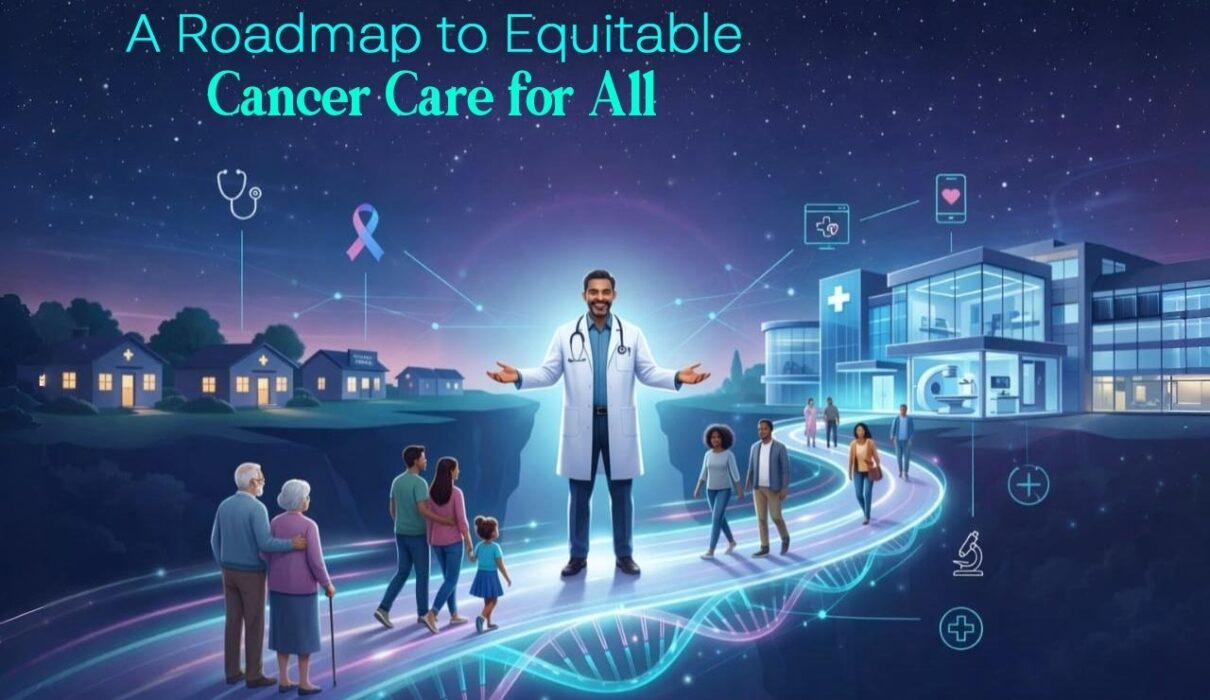
As the landscape of cancer care continues its rapid evolution, 2026 presents both significant challenges and unparalleled opportunities. The focus is increasingly shifting towards ensuring equitable cancer care for all, recognizing that disparities persist across various demographics, including race, income, and geography . With an estimated 18 million cancer survivors in the U.S. today, projected to exceed 26 million by 2040, and new cancer cases expected to top two million in 2025/2026, the imperative to close the care gap has never been more critical . This article outlines a comprehensive roadmap for achieving equitable cancer care by 2026, integrating technological advancements, patient-centric approaches, and robust policy frameworks.
Pillar 1: Technological Innovation and Early Interception
Technological advancements are at the forefront of efforts to enhance early detection and interception, thereby preventing cancer from becoming life-threatening. The year 2026 is expected to witness a surge in novel oncology drugs, including cell and gene therapies, antibody-drug conjugates, and bispecific antibodies, offering new hope for treatment .
AI and Radiomics: Precision in Early Detection
Artificial intelligence (AI) is revolutionizing early detection, particularly through radiomics. AI-powered radiomics can analyze medical images, such as low-dose computed tomography (CT) scans for lung cancer, to discriminate problematic pulmonary nodules from benign ones. This reduces false positives and unnecessary procedures, making screening more efficient and accessible .
Cervical Health Awareness Month: Promoting Safe Practices for Better Cervical Health
The Rise of Liquid Biopsies
Liquid biopsies are emerging as a powerful tool for early cancer detection and monitoring. While still evolving, these blood-based tests are expected to improve significantly by 2026, with enhanced data generation and machine learning applications refining their accuracy. The challenge of tumor localization remains, necessitating the pairing of blood signals with intelligent, minimally invasive localization strategies .
Pillar 2: Digital Navigation and Patient-Centric Care
Enhancing the patient experience and streamlining care coordination are crucial for equitable cancer care. Digital oncology navigation platforms are playing a pivotal role in achieving this by reducing delays and supporting patients through complex treatment journeys . These platforms facilitate virtual care, remote oncology support, and improved communication between patients and healthcare providers.
Why Equal Access to Healthcare Matters for Every Indian
Pillar 3: Addressing Social Determinants and Metabolic Health
Health equity in cancer care extends beyond clinical treatments to encompass broader social determinants of health. A significant area of focus for 2026 is the integration of metabolic health into cancer prevention strategies. Obesity, recognized as a chronic inflammatory state, is linked to 13 different cancer types and accounts for 7.6% of all cancers . Addressing obesity through lifestyle programs and medical interventions is a key component of a holistic approach to cancer prevention and care equity.
Policy and Advocacy: Reconfiguring the Healthcare Landscape
Achieving equitable cancer care by 2026 necessitates proactive policy changes and advocacy. This involves reconfiguring logistical, financial, and cultural thresholds that currently impede access to quality care. Key policy initiatives include outcomes-based reimbursement models, value-based contracts with manufacturers, and increased investment in primary care and screenings. Furthermore, supporting culturally competent care and outreach programs, and ensuring inclusive clinical trials, are vital for reaching underserved communities.
Conclusion: A Collective Responsibility for 2026 and Beyond
Closing the care gap in cancer is a multifaceted endeavor that requires a concerted effort from healthcare providers, policymakers, researchers, and communities. By embracing technological innovations, prioritizing patient-centric approaches, addressing social determinants of health, and implementing supportive policies, the vision of equitable cancer care for all by 2026 is attainable. This roadmap serves as a guide for collective action, ensuring that scientific breakthroughs and compassionate care reach every individual in need.