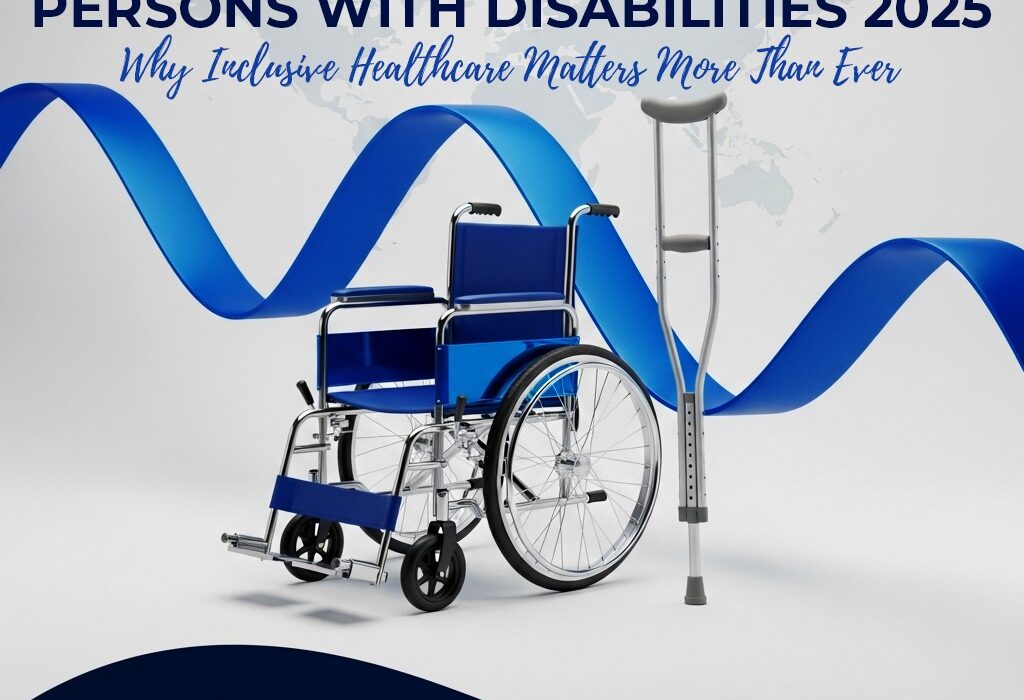
Every December 3rd, the world observes the International Day of Persons with Disabilities. But let’s cut through the corporate virtue signaling and generic social media graphics. In 2025, this day demands more than awareness—it demands accountability. With aging populations, post-pandemic scars, and tech leaps, the 1.3 billion people worldwide living with disabilities still face healthcare systems that weren’t built for them.
True inclusivity isn’t about updating language guides or posting ribbons. It’s about whether a wheelchair user can actually access a mammogram without a logistical nightmare. Let’s dive into why this matters, especially through an Indian lens, and what real change looks like.
The Global and Indian Context: Rising Numbers, Persistent Gaps
By 2025, projections from the World Health Organization (WHO) suggest disabilities could affect up to 16% of the global population—over a billion people navigating systems that consistently fail them. In India alone, the 2011 Census recorded the disabled population at 2.21%, but experts from the National Institute for the Empowerment of Persons with Visual Disabilities argue the real figure hovers around 5-6% when accounting for underreporting and rural blind spots.
The data gets grimmer. A 2024 study in the Indian Journal of Medical Research highlights how climate change and urban migration are exacerbating disabilities—heatwaves triggering mobility issues, pollution worsening respiratory conditions. Meanwhile, persons with disabilities (PWDs) in the Global South face a 3x higher mortality rate from preventable conditions compared to the general population.
The UN’s 2025 theme, “Empowering Persons with Disabilities and Ensuring Inclusivity and Equality,” couldn’t be timelier. Yet India’s public health spending remains a measly 1.3% of GDP, while global disability-inclusive service costs are projected to hit $8 trillion by 2030.
Link: World Health Organization – World Report on Disability
Barriers to Inclusive Healthcare: What 2025 Data Reveals
When we talk about inclusive healthcare, most people think of ramps. That’s barely scratching the surface. Inclusive healthcare means care that’s accessible, affordable, and tailored—no asterisks, no exceptions.
The Infrastructure Failure
Take India’s National Programme for Rehabilitation of Persons with Disabilities (NPRPD). A 2024 paper from the Journal of Family Medicine and Primary Care found only 40% of eligible PWDs in urban areas access it, dropping to 15% in villages. Why? Crumbling infrastructure—hospitals without ramps, apps without screen-reader compatibility, medical equipment designed for “standard” bodies.
The Digital Divide
Telehealth was supposed to be the great equalizer. Instead, it’s become another barrier. Data from the Indian Council of Medical Research (ICMR) in early 2025 shows telemedicine adoption for PWDs lagged 30% behind the general population. Platforms lacking sign language support mean deaf patients miss virtual consults entirely. If your app isn’t screen-reader friendly, you’re effectively denying care.
The Diagnostic Gap
Here’s a reality check: doctors are often trained on “standard” bodies. When a patient with cerebral palsy presents with pain, it’s frequently dismissed as “part of the condition” rather than investigated as a new issue. This diagnostic overshadowing is killing people.
The Mental Health Crisis
Post-COVID, disabilities intertwined with anxiety have surged. A 2025 UNICEF report on India notes a 25% rise in neurodevelopmental disorders among children, yet only 10% receive specialized care. The WHO reports that 50% of PWDs in low-income countries skip preventive care entirely due to stigma or cost.
Link: ICMR – Disability Health Report 2025 (Access latest publications via official site)
The Economic Argument: Health Autonomy Enables Economic Liberty
From a practical standpoint, you cannot have a thriving economy if a significant portion of the workforce is sidelined by inaccessible care. Inclusive healthcare isn’t charity—it’s an investment in human capital.
Research from the Journal of Family Medicine and Primary Care suggests that for every rupee invested in accessible primary care for PWDs, the economic return is fourfold. A 2025 World Bank forecast predicts that inclusive policies could boost India’s GDP by 7% by 2030.
Simply put: healthy people work. Sick people don’t. Stop making it hard for people to stay healthy.
Success Stories and Innovations: Glimmers of Hope
It’s not all doom. 2025 brings genuine progress through technology and policy.
In India, the Ayushman Bharat scheme expanded in 2024 to cover 500 million people, including PWDs, with a focus on assistive devices. A pilot program in Kerala, detailed in Lancet Regional Health – Southeast Asia, used AI-powered prosthetics to cut rehabilitation time by 40% for amputees.
Delhi’s inclusive clinics, inspired by the Accessible India Campaign, now feature Braille menus and priority queues. Globally, the WHO’s Assistive Technology Initiative aims to reach 1 billion PWDs by 2030, with 2025 milestones including affordable hearing aids via manufacturers like Starkey India.
Remember Arunima Sinha, India’s first female amputee to summit Everest? Her journey demonstrates how inclusive rehabilitation transforms lives—proof that investment in accessibility yields extraordinary returns.
Link: UNICEF India – Child Disabilities Report
Moving Beyond Awareness: What Actually Needs to Change
We don’t need more ribbons or awareness campaigns. We need structural transformation:
- Universal design mandates for all medical equipment—MRI manufacturers, examination tables, diagnostic tools
- Competency-based clinical training that focuses on outcomes for complex bodies, not just sensitivity workshops
- Enforcement of existing laws like the RPWD Act 2016’s mandates, including 4% job quotas in healthcare
- Direct funding models that empower patients to choose providers, forcing hospitals to compete on accessibility
- Digital accessibility standards requiring all telehealth platforms to be screen-reader and sign-language compatible
Why 2025 Is the Tipping Point
International Day of Persons with Disabilities 2025 isn’t just another calendar date—it’s a pivot point. With India’s Digital Health Mission pushing for universal coverage, we have unprecedented momentum. But without enforcing existing mandates and demanding accountability, we risk widening the very gaps we claim to address.
Inclusive healthcare is the ultimate litmus test for a functional society. If we can’t figure out how to treat the most vulnerable without bureaucratic nightmares, we’ve failed at the basics.
Equity isn’t charity. It’s justice.
Your Role in Building an Inclusive Tomorrow
Stop posting. Start fixing.
Concrete actions you can take:
- Support local organizations like the National Association for the Blind with donations or volunteer time
- Demand transparent accessibility protocols from your healthcare providers—ask specifically about their procedures for patients with complex disabilities
- Contact your elected representatives about enforcing RPWD Act provisions
- Audit your workplace for inclusivity and advocate for change
- Vote with your wallet—support clinics and hospitals that demonstrate genuine accessibility
Share your thoughts below: What’s one change you’d push for in healthcare? Let’s make 2025 the year inclusivity stops being a talking point and becomes standard practice.
Because when healthcare leaves no one behind, we all thrive.
Disclaimer
Statistics drawn from 2024-2025 publications; always cross-verify with sources for the latest updates. This post aims to inform and advocate, not replace medical advice.
Sources Cited: WHO, ICMR, Indian Journal of Medical Research, UNICEF, Journal of Family Medicine and Primary Care, Lancet Regional Health – Southeast Asia, World Bank. All insights synthesized from publicly available research.